
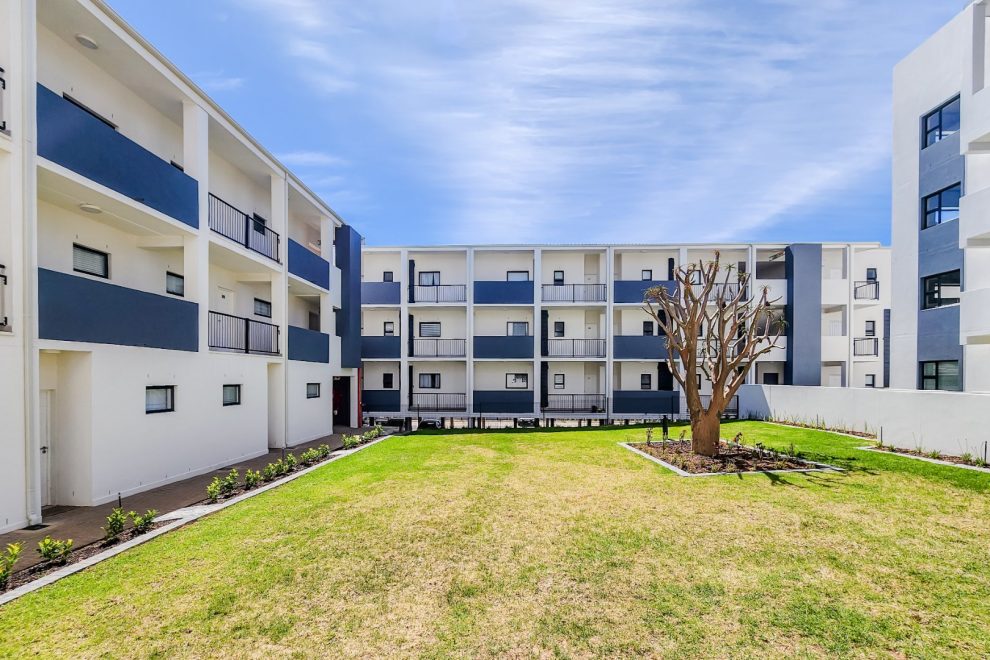
As 2025 draws to a close, the residential construction sector has emerged more disciplined, resilient, and strategically focused than in recent years. Following a prolonged period of economic pressure, interest rate volatility, and rising input costs, the industry spent much of 2025 stabilising and recalibrating. According to industry indicators, residential building activity showed modest but consistent recovery, with housing demand remaining strongest in well-located urban and coastal growth nodes.
A Year in Review
In 2025, buyer and investor behaviour continued to favour secure, lifestyle-driven residential developments, particularly sectional title and townhouse projects. Semigration trends remained a key driver, with Cape Town and surrounding regions consistently accounting for a significant share of national residential demand. Market data suggests that developments offering security, energy efficiency, and proximity to amenities outperformed traditional standalone housing, both in sales velocity and rental demand.
From a construction perspective, 2025 was characterised by cost stabilisation rather than cost reduction. While material price escalation moderated compared to previous years, construction inflation remained above historical averages. This placed pressure on margins and reinforced the importance of early planning, realistic budgeting, and value engineering. Projects that achieved success were those with strong feasibility studies, disciplined scope control, and experienced contractors involved from the outset.
What to expect in 2026
Looking ahead to 2026, the outlook for residential construction is increasingly constructive. Market analysts anticipate improved interest rate stability, which is expected to support buyer affordability and investor confidence. Demand fundamentals remain strong, underpinned by urbanisation, housing shortages in key nodes, and continued preference for managed, secure living environments. However, growth is expected to be measured rather than speculative.
Sustainability and operational efficiency are also set to play a greater role in 2026. Buyers are placing more emphasis on energy-efficient design, durable materials, and long-term running costs, while developers are prioritising build quality and lifecycle performance. This shift places greater responsibility on contractors to deliver not just homes, but resilient assets.
As the sector transitions from recovery to responsible growth, 2026 presents meaningful opportunity for well-positioned projects and experienced delivery partners. At Cape Projects Construction, we remain focused on disciplined execution, collaborative partnerships, and building residential developments that respond to both current market realities and future expectations.